
All grade guides — one page, every alloy we cover
Browsing for a grade? The full library of per-grade technical guides is on one list.
Open the listNickel 200 and its low-carbon twin Nickel 201 are commercial-purity nickel (99 % min): the go-to materials for caustic soda service, food-contact processing equipment and electrical components. They look identical on paper — same density, same melting range — but a single carbon specification decides which one you buy: above 315 °C, Nickel 200 can embrittle by graphitisation while 201, capped at 0.02 % carbon, does not. This guide covers the composition limits, annealed mechanical and physical data, the caustic and food-grade selection rules, and the fabrication habits that keep pure nickel performing.
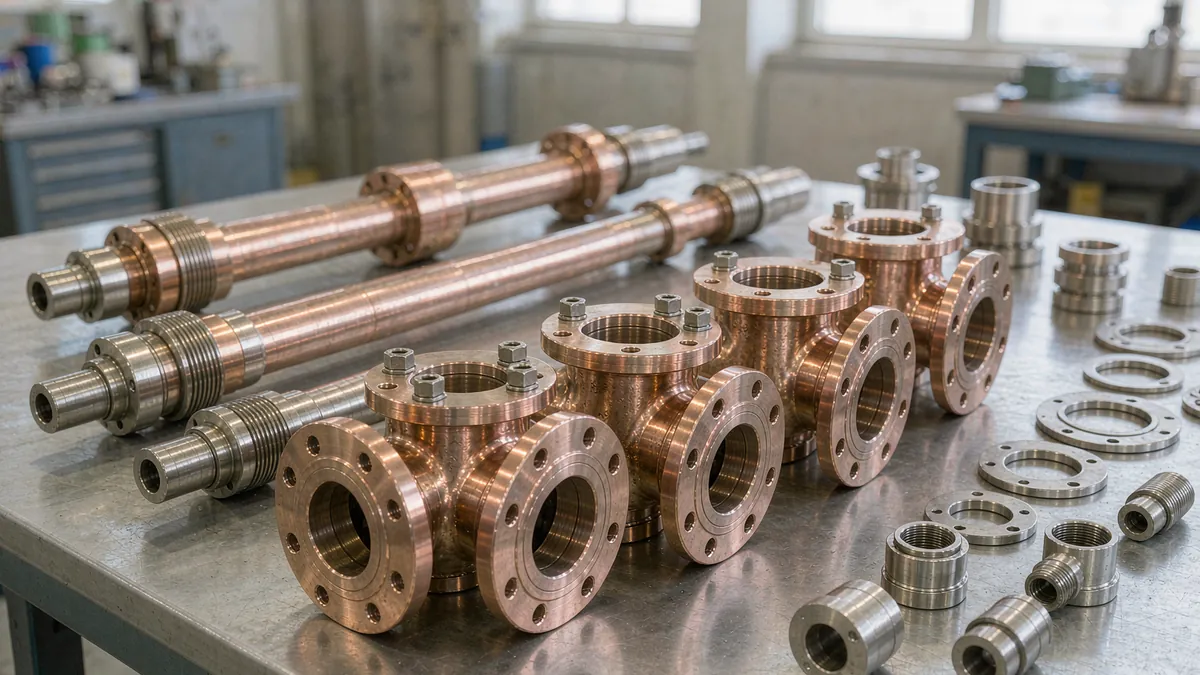
Nickel 200 (UNS N02200, W.Nr 2.4060) and Nickel 201 (UNS N02201, W.Nr 2.4061) are commercially pure nickel — 99.0 % minimum nickel with only trace iron, manganese, silicon and copper. Pure nickel has three superpowers: it is outstandingly resistant to caustic alkalis (NaOH and KOH at all concentrations), it keeps its excellent ductility and formability down to cryogenic temperature and up to moderately high temperature, and it conducts heat and electricity far better than any alloyed nickel grade. The only meaningful difference between the two is carbon: 200 allows up to 0.15 %, 201 is capped at 0.02 %. Above about 315 °C, carbon in Nickel 200 can precipitate as intergranular graphite and embrittle the metal — so 201 is the mandatory choice for high-temperature caustic equipment, while 200 serves at lower temperature where it is slightly stronger and cheaper.
| Element | Nickel 200 (N02200) | Nickel 201 (N02201) | Why it matters |
|---|---|---|---|
| Nickel (Ni) | 99.0 min | 99.0 min | The corrosion-resisting, ductile, thermally conductive matrix itself |
| Carbon (C) | 0.15 max | 0.02 max | The one decisive difference — low C in 201 prevents graphitisation above 315 °C |
| Iron (Fe) | 0.40 max | 0.40 max | Residual; kept low to preserve purity |
| Manganese (Mn) | 0.35 max | 0.35 max | Deoxidation |
| Silicon (Si) | 0.35 max | 0.35 max | Deoxidation |
| Copper (Cu) | 0.25 max | 0.25 max | Residual control |
Everything except the carbon row is identical between the two grades — mechanically they differ only in that 201 is marginally softer and more ductile thanks to the lower carbon.
Typical annealed values (mill-certificate ranges) per ASTM B160 / B162:
| Condition | Yield strength (0.2 %) | Tensile strength | Elongation |
|---|---|---|---|
| Nickel 200 — annealed | 105–210 MPa | 345–470 MPa | 35–50 % |
| Nickel 201 — annealed | 100–150 MPa | 345–415 MPa | 40–50 % |
| Hard-drawn bar (both grades) | ≈ 590 MPa | 700–900 MPa | low — for fasteners only |
Pure nickel cannot be strengthened by heat treatment — only by cold work, and cold-worked strength is lost on annealing. Stress relief after heavy forming is done around 550–700 °C. Note that annealed tensile and elongation fall significantly above about 315 °C; use 201 and design against the elevated-temperature curves for any duty above that threshold.
| Property | Nickel 200 | Nickel 201 |
|---|---|---|
| Density | 8.89 g/cm³ | 8.89 g/cm³ |
| Melting range | 1,435–1,446 °C | 1,435–1,446 °C |
| Thermal conductivity (room temp) | ≈ 70.2 W/m·K | ≈ 79.3 W/m·K |
| Specific heat | ≈ 456 J/kg·K | ≈ 456 J/kg·K |
| Thermal expansion (20–100 °C) | ≈ 13.3 ×10⁻⁶ /K | ≈ 13.1 ×10⁻⁶ /K |
| Modulus of elasticity | ≈ 204 GPa | ≈ 207 GPa |
| Electrical resistivity | ≈ 0.096 µΩ·m | ≈ 0.085 µΩ·m |
| Magnetic behaviour | Ferromagnetic at room temperature | Ferromagnetic, slightly weaker response |
| Curie point | ≈ 360 °C | ≈ 360 °C |
Two physical facts matter for design: thermal conductivity near 70–80 W/m·K is roughly 3–4× higher than Monel or nickel-chromium alloys — a genuine advantage for heat-exchanger tubing and heating-element sheaths. And ferromagnetism up to the 360 °C Curie point means 200/201 must never be specified where a non-magnetic grade is required — that is where 904L or nickel-copper alloys take over.
Selection rule of thumb: caustic or food duty below 315 °C — Nickel 200 is sufficient and slightly stronger; any duty above 315 °C, or any application where subsequent welding is followed by sustained high-temperature service — specify Nickel 201. When in doubt on caustic evaporators, buy 201: the premium over 200 is small next to the consequence of graphitisation embrittlement.
| Industry | Typical 200 / 201 components |
|---|---|
| Chlor-alkali / caustic | Evaporator tubing, caustic storage and piping, pump and valve bodies, mercerising equipment |
| Food processing | Processing vessels, mixing equipment, salt-manufacturing plant, food-contact tooling |
| Electrical & electronics | Electrode supports, battery terminals and contacts, heater sheaths, lead wires, thyratron/grid components |
| Chemical processing | Heat exchangers for caustic and non-oxidising media, transfer lines in synthetic-fibre plants |
| Cryogenic equipment | Liquid-hydrogen and cryogenic hardware — pure nickel retains ductility to very low temperature |
Welding: pure nickel welds readily by GTAW/SMAW with ERNi-1 / ENi-1 filler — no preheat or post-weld heat treatment is needed for normal thicknesses. The critical shop discipline is cleanliness: contact with sulphur- or lead-bearing oils, marking crayons or cutting fluids can cause hot-short weld metal, so degrease and use nickel-safe consumables.
Forming: annealed 200/201 is one of the most formable metals we sell — deep drawing, cold heading and bending all work well, with intermediate anneals after heavy multi-pass cold reduction. Avoid 200 for parts that will serve above 315 °C after cold work; the stress relief plus the carbon rule both point to 201.
Procurement: check the carbon figure on the 3.1 certificate — it is the entire difference between the two grades, and mislabelled stock is a real risk in mixed inventory. For electrical buyers, confirm the resistivity range rather than assuming; for caustic equipment buyers, state the operating temperature explicitly so we quote the correct grade the first time.
We supply both grades in bar, plate, sheet, seamless tube, strip, mesh and machined parts, with EN 10204 3.1 mill certificates and carbon-content verification on every lot. Whether you need evaporator tube, battery strip or food-plant vessels, tell us the medium and the peak operating temperature and we will ship the right grade the first time.
Only carbon: 200 allows up to 0.15 %, 201 is capped at 0.02 %. Above about 315 °C the carbon in Nickel 200 can precipitate as intergranular graphite and embrittle the metal, so 201 is specified for high-temperature service — everything else (density, melting range, corrosion behaviour) is essentially identical.
Yes — pure nickel is ferromagnetic at room temperature, and both grades stay ferromagnetic until the Curie point near 360 °C. If your application needs a non-magnetic metal, choose 904L, Alloy 20 or a nickel-copper alloy instead.
Dilute non-oxidising acids (moderate-temperature HCl and H₂SO₄) — yes. Oxidising acids such as nitric, or hot sulphur-bearing atmospheres, will attack it severely. For oxidising-acid duty use a stainless or C-family alloy.
Pure nickel outperforms Monel in high-concentration caustic, especially at elevated temperature, and offers far better thermal conductivity. Monel 400 wins where the caustic stream also carries seawater or brine. In clean chlor-alkali service, nickel 200/201 is the established choice.
Send us your drawing or specification for a quotation — we reply within one business day.
Buy this grade as: Plate · Round bar · Seamless tube · Elbows · Reducers · Flanges · Fasteners · Welding wire
Browsing for a grade? The full library of per-grade technical guides is on one list.
Open the list
Which family fits which corrosion or temperature problem — and the selection rules that keep you out of trouble.
Read article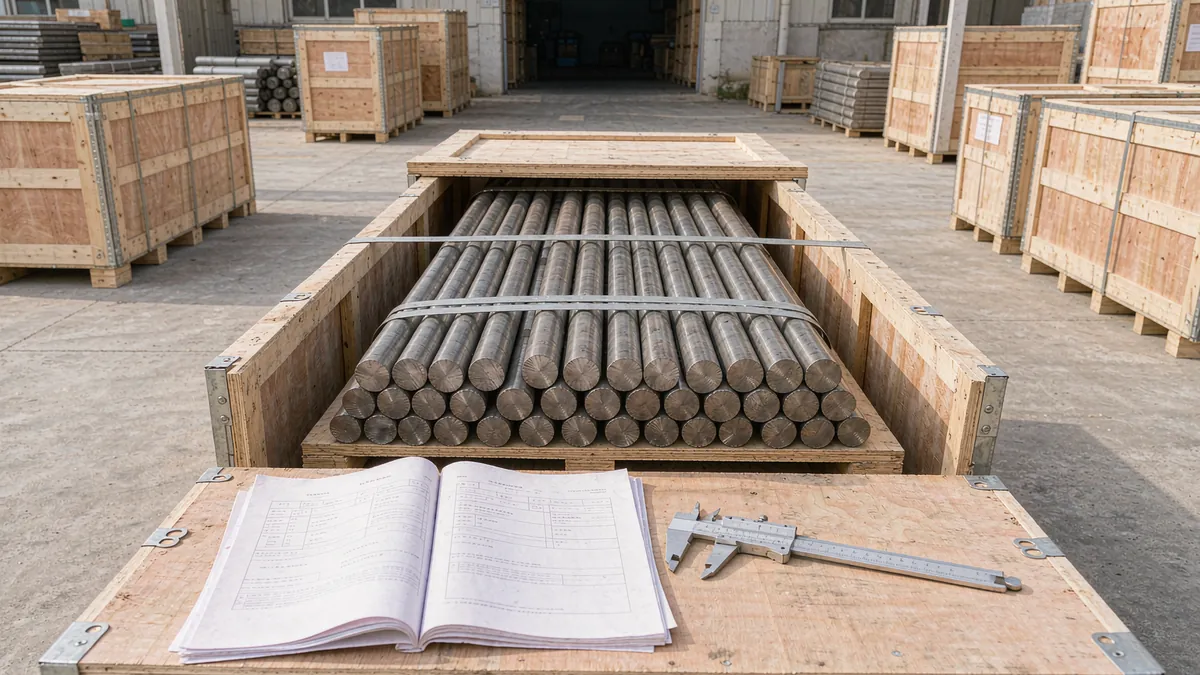
Traceability, honest heats, the documents to demand — and the red flags to walk away from.
Read article