
All grade guides — one page, every alloy we cover
Browsing for a grade? The full library of per-grade technical guides is on one list.
Open the listSanicro 28 — sold as Alloy 28 outside Sandvik's catalogue — is the high-chromium, high-nickel austenitic built for two brutal niches: wet-process phosphoric acid and deep sour gas wells. With 31 % nickel, 27 % chromium, 3.5 % molybdenum and 1 % copper it shrugs off the chloride-, fluoride- and H₂S-bearing media that destroy lesser stainless, while staying fully austenitic, non-magnetic and easy to weld. This guide collects the numbers and selection rules we use when quoting Sanicro 28 tubing, plate, bar and fittings.
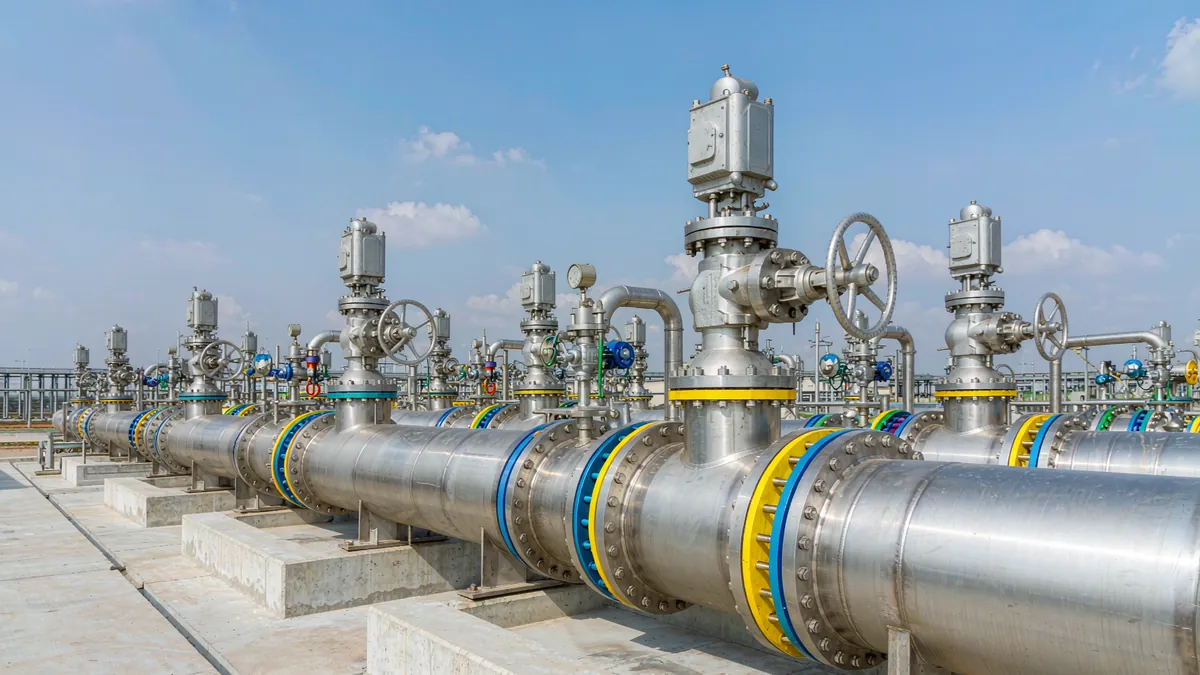
Sanicro 28 (UNS N08028, EN 1.4563 / X1NiCrMoCu31-27-4) is a super-austenitic stainless steel with a deliberately extreme Cr + Ni combination: 26–28 % chromium against chloride pitting, 30–34 % nickel against chloride stress-corrosion cracking and H₂S-related cracking, 3–4 % molybdenum for pitting resistance and 0.6–1.4 % copper for wet phosphoric and sulfuric acid performance. It was engineered by Sandvik for wet-process phosphoric-acid evaporators — historically one of the fastest metal-destroying duties in the fertiliser industry — and then found a second large home in deep sour gas wells as OCTG tubing and in sour-service heat exchangers. PREN sits around 38–40, between 904L and the 6 % Mo grades, but the very high nickel content is what separates it: it is the austenitic of choice where both chlorides and hydrogen sulphide are present at pressure.
| Element | Content (wt %) | Why it matters |
|---|---|---|
| Nickel (Ni) | 30.0–34.0 | Chloride-SCC immunity at pressure and temperature; resistance to sulphide-stress cracking in sour gas |
| Chromium (Cr) | 26.0–28.0 | Pitting resistance in oxidising chloride media; the "27" in the DIN name X1NiCrMoCu31-27-4 |
| Molybdenum (Mo) | 3.0–4.0 | Pitting/crevice resistance and strength in reducing media |
| Copper (Cu) | 0.6–1.4 | Performance in wet-process phosphoric and sulfuric acid |
| Carbon (C) | 0.020 max | Extra-low carbon — no sensitisation, weldable without post-weld anneal |
| Manganese / Silicon | ≈ 2.0 / 1.0 max | Deoxidation and cleanliness control |
| Iron (Fe) | Balance | Matrix — keeps it a stainless steel on cost |
Two naming traps worth flagging: some datasheets narrow the nickel band to 30–32 % (matching the EN grade designation), while ASTM allows up to 34 % — both are the same alloy family, check the mill certificate. And "Sanicro 28" is Sandvik's trademark: the generic trade designation is Alloy 28, UNS N08028, W.Nr 1.4563, or EN number NiCr31MoCu.
Minimum values in the solution-annealed condition with typical mill-certificate values in brackets:
| Condition / product | Yield strength (0.2 %) | Tensile strength | Elongation | Hardness |
|---|---|---|---|---|
| Tube / general — annealed (Sandvik data) | ≥ 240 MPa [280–350] | ≥ 640 MPa [650–750] | ≥ 35 % [40–50] | ≤ 220 HB |
| Plate / sheet — annealed (ASTM B668 minimums) | ≥ 214 MPa | ≥ 500 MPa | ≥ 40 % | ≤ 90 HRB (typ. ≈ 85) |
| Typical annealed, all forms | ≈ 250 MPa | ≈ 650 MPa | ≈ 45 % | ≈ 85 HRB |
Notes for designers: Sanicro 28 is a low-strength, high-toughness grade — its job is corrosion resistance, not load carrying. Yield stays around 250 MPa and drops slowly with temperature; toughness is retained down to cryogenic temperature (duty from −196 °C is routine for liquefied-gas and low-temperature equipment). For sour service the controlling limit is hardness (NACE MR0175 cap) rather than strength, and the annealed condition complies comfortably.
| Property | Value |
|---|---|
| Density | 8.09 g/cm³ (≈ 8.0 per some datasheets) |
| Melting range | 1,350–1,400 °C |
| Thermal conductivity (room temperature) | ≈ 12 W/m·K (datasheets range 11.4–13) |
| Specific heat | ≈ 450–500 J/kg·K |
| Thermal expansion (20–100 °C) | ≈ 14.5–15.0 ×10⁻⁶ /K |
| Modulus of elasticity | ≈ 196–200 GPa |
| Electrical resistivity | ≈ 0.95–1.0 µΩ·m |
| Magnetic behaviour | Non-magnetic (fully austenitic); faint response possible after heavy cold work |
Published thermal values for this grade vary noticeably between producers; the figures above are typical mid-range values — for pressure design, use the values on the specific mill certificate.
Selection rule of thumb: contaminated wet phosphoric acid or deep sour gas → Sanicro 28. Clean seawater or brine above ~60 °C → 6 % Mo grades (AL-6XN / 254 SMO). Hot concentrated reducing acids (HCl, H₂SO₄ above ~60 °C) → C-family alloys (C-276 / C-22). The high nickel content makes Sanicro 28 the cheapest austenitic that satisfies NACE sour-service lists.
| Industry | Typical Sanicro 28 components |
|---|---|
| Fertiliser / phosphoric acid | Wet-process phosphoric acid evaporator tubes, acid coolers, digesters internals |
| Oil & gas | Sour-gas well tubing (OCTG), downhole and valve trim, high-pressure sour-service heat exchangers |
| Chemical processing | Sulfuric acid coolers, mixed-acid transfer lines, chloride-bearing reactor internals |
| Marine / coastal | Seawater-cooled heat exchangers where sour and chloride duties overlap |
| Power / environmental | FGD scrubber components, acidic condensate handling |
| Pharma / food | High-cleanliness piping where chloride CIP fluids rule out 316L |
Sanicro 28 welds like a conventional austenitic: GTAW/GMAW/SMAW, no preheat, no post-weld solution anneal required for the standard corrosion duties (the extra-low carbon keeps the HAZ safe). Use a matching-composition Alloy 28 filler where available, or an overmatching ERNiCrMo-3 (625-type) filler to buy extra weld-metal pitting reserve — follow the consumable producer's qualification for your medium. Keep interpass below 150 °C, pickle and passivate the weld zone. For cold-formed parts serving above about 400 °C, a solution anneal (≈ 1,100–1,160 °C, rapid quench) restores ductility. The grade's temperature ceiling: long-term service above ~600 °C invites sigma-phase embrittlement, and pressure-design practice keeps it below ~550 °C.
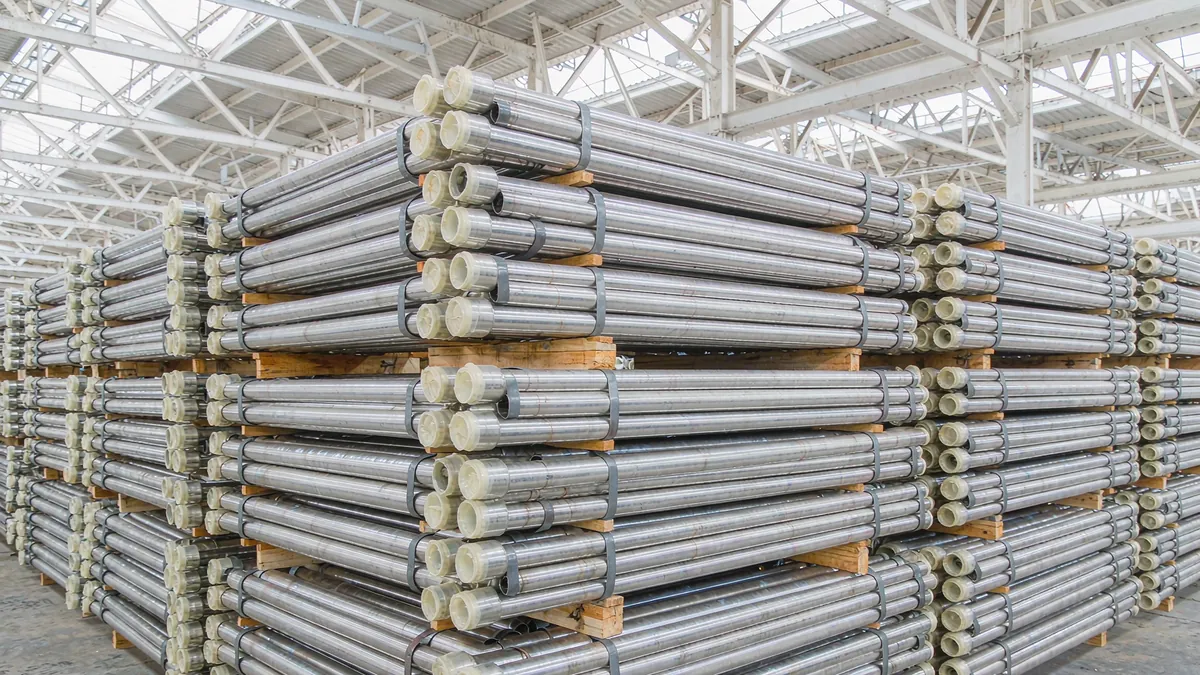
Purchasing notes: order by UNS N08028 plus the product standard (B668 plate, B704 tube, B366 fittings), not just "Sanicro 28" — the trademark belongs to one producer and generic Alloy 28 is readily available at better prices. For OCTG sour wells, confirm NACE MR0175 solution status and hardness on the certificate. If your duty is phosphoric acid, state the acid concentration, chloride and fluoride levels so the mill can confirm suitability — that data decides the order, not the price alone.
Nothing metallurgical — Sanicro 28 is Sandvik's trademark, Alloy 28 / UNS N08028 / EN 1.4563 is the same composition from other mills. For procurement, specify UNS N08028 with the relevant ASTM standard; that is what protects you from substitute grades.
For wet-process phosphoric acid and sour-gas service, the 31 % nickel content plus copper makes Sanicro 28 the proven choice where 904L is marginal and 254 SMO adds cost without sour-service heritage. Conversely, for clean seawater above 60 °C, the 6 % Mo grades have the higher PREN and are the better pick — the media decides, not the alloy ranking.
Yes. In the solution-annealed condition its hardness (≤ 220 HB, typically ≈ 85 HRB) is well inside the NACE MR0175 / ISO 15156 limits, and its nickel level resists sulphide-stress cracking. Ask for the compliance statement and hardness values on the mill certificate when ordering for sour duty.
Pressure and corrosion service is routinely specified from −196 °C up to about 425–550 °C. Long-term exposure above roughly 600 °C risks sigma-phase embrittlement — above that band you should be quoting a nickel alloy, not a stainless.
Send us your drawing or specification for a quotation — we reply within one business day.
Buy this grade as: Plate · Round bar · Seamless tube · Flanges
Browsing for a grade? The full library of per-grade technical guides is on one list.
Open the list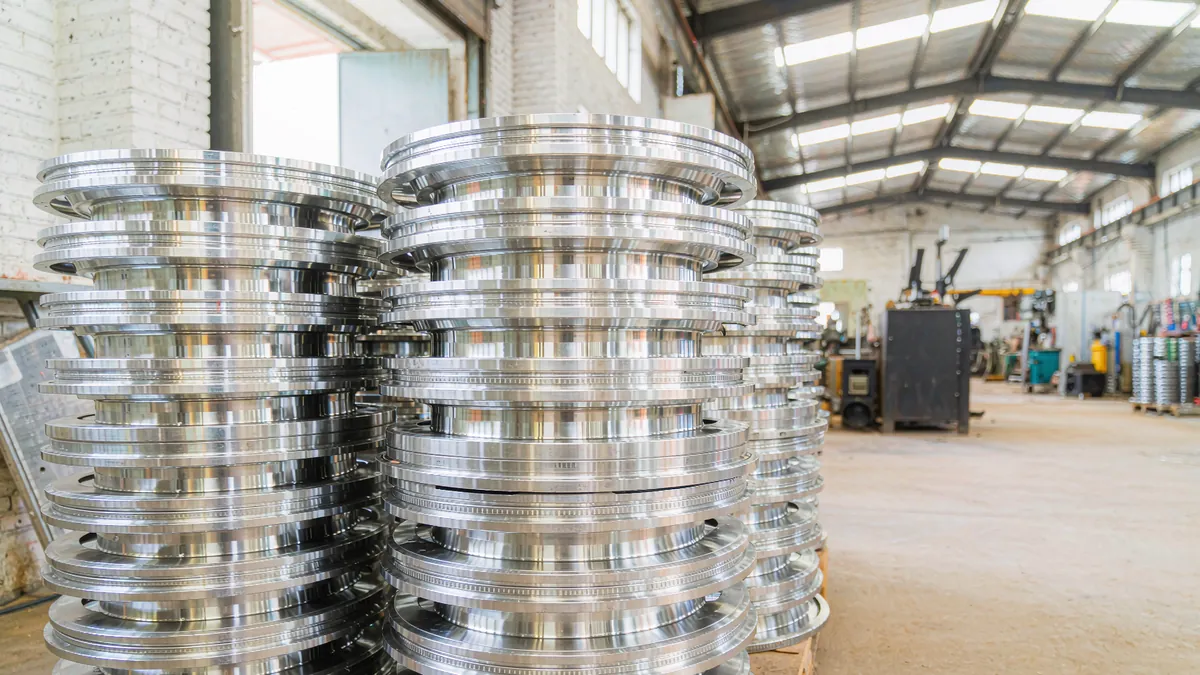
Which family fits which corrosion or temperature problem — and the selection rules that keep you out of trouble.
Read article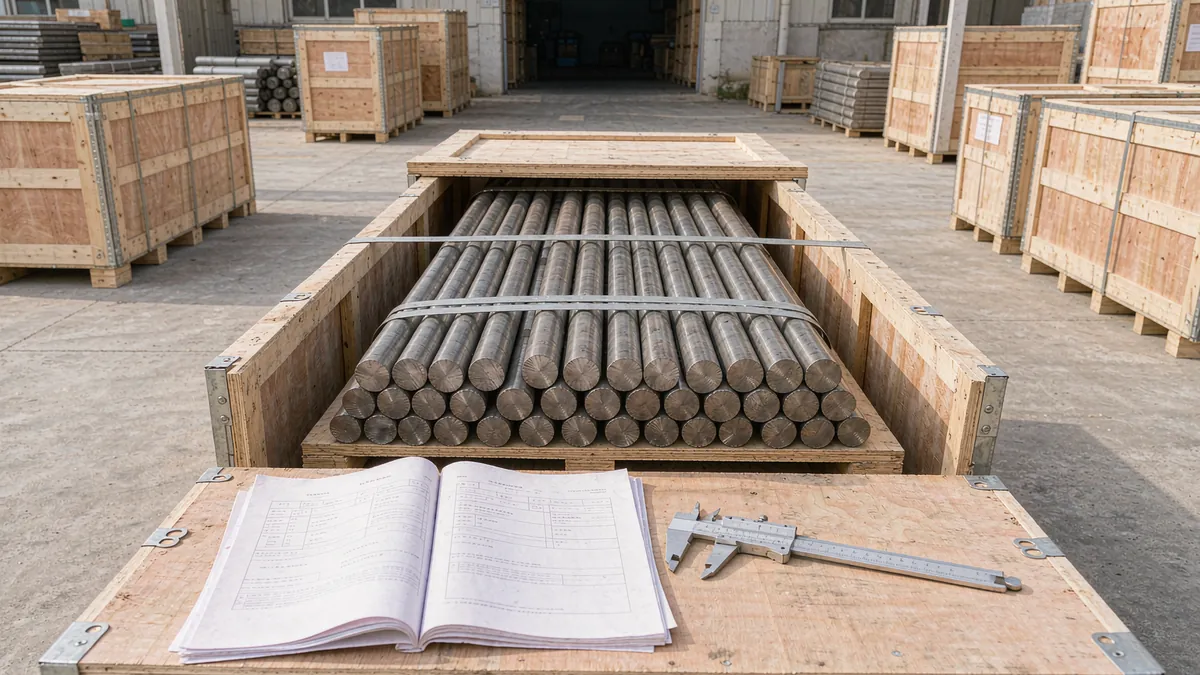
Traceability, honest heats, the documents to demand — and the red flags to walk away from.
Read article