[email protected] WhatsApp +86 159 0085 2030 Qingpu, Shanghai Reply within 1 business day

2205 vs 2507: when to pay the super-duplex premium

If you are specifying a duplex for chloride service, the default is 2205 — and it is the right default for the majority of cases. The super duplex 2507 is genuinely better in some services, but it costs more, is harder to fabricate, and a lot of buyers over-spec it. This article is the short version of when the 2507 premium is justified and when it is not.

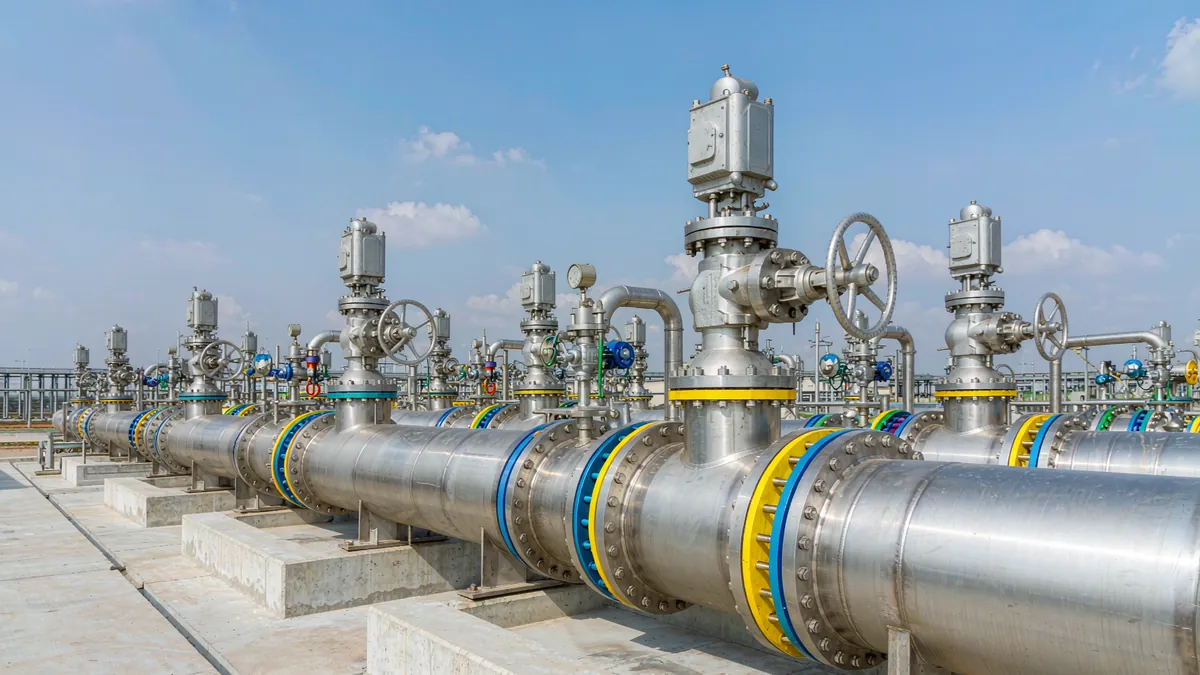
Duplex stainless flanges at an oil and gas yard

Where 2205 is the answer

2205 (S32205 / S31803, EN 1.4462) is the workhorse duplex. With ~22 % Cr, 5 % Ni, 3 % Mo and 0.15 % N it delivers roughly twice the yield strength of 316L (≈ 450 MPa vs 220 MPa) and very good chloride pitting resistance (PREN ~ 35). It is the right answer for:

  • Seawater cooling systems and firewater lines (up to ~ 60 °C)
  • Desalination MSF / MED evaporator shells and tube sheets
  • Pulp & paper digesters and bleach plant piping
  • Oil & gas topside piping, manifolds and process vessels in sweet / mildly sour service
  • Structural and architectural applications where higher strength reduces weight

Where 2507 earns the premium

2507 (S32750, EN 1.4410) pushes Cr to 25 %, Mo to 4 % and N to 0.3 %, lifting PREN to ~ 43 and yield to ~ 550 MPa. The extra margin matters in three situations:

  • Hot seawater service above 60 °C, or subsea tie-back piping exposed to deep-water cold combined with hot production fluids
  • High-pressure / high-temperature wells and subsea equipment with concentrated chloride brines
  • FGD absorbers and hot concentrated chloride streams in flue-gas desulphurisation

The hidden cost: fabrication is tighter

A 2507 mistake is more expensive than a 2205 mistake. The reasons:

  • Tighter interpass temperature window (typically ≤ 100 °C, with hot-spot monitoring) — slows welding
  • Pickling and passivation are mandatory after welding, not optional
  • Cold formability is lower — 2507 likes generous bend radii and warm forming (200–300 °C) for heavy sections
  • Limited machinist pool — most shops run 2205 routinely, 2507 only on a project basis

Key takeaway

If your service is below 60 °C in seawater or below about 100 °C in process chloride brines, 2205 is the answer and 2507 is over-spec. Reserve 2507 for the three situations above — hot seawater, deep-water subsea, hot FGD / concentrated chloride — and you will not over-pay on the 90 % of jobs where 2205 is correct.

Need a duplex or super duplex grade?

Send us your drawing or specification for a quotation — we reply within one business day.

Request a quote